
About project
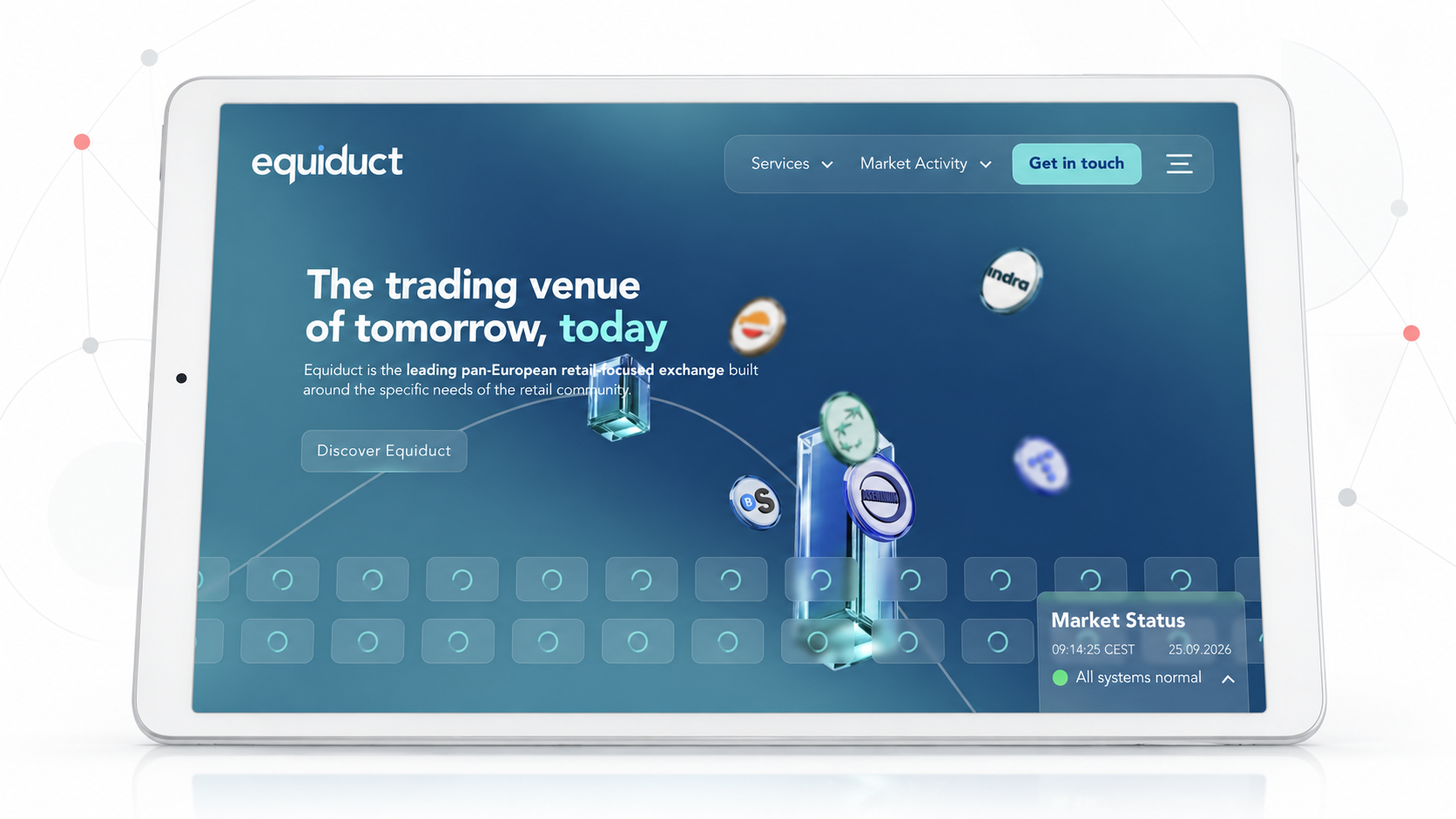
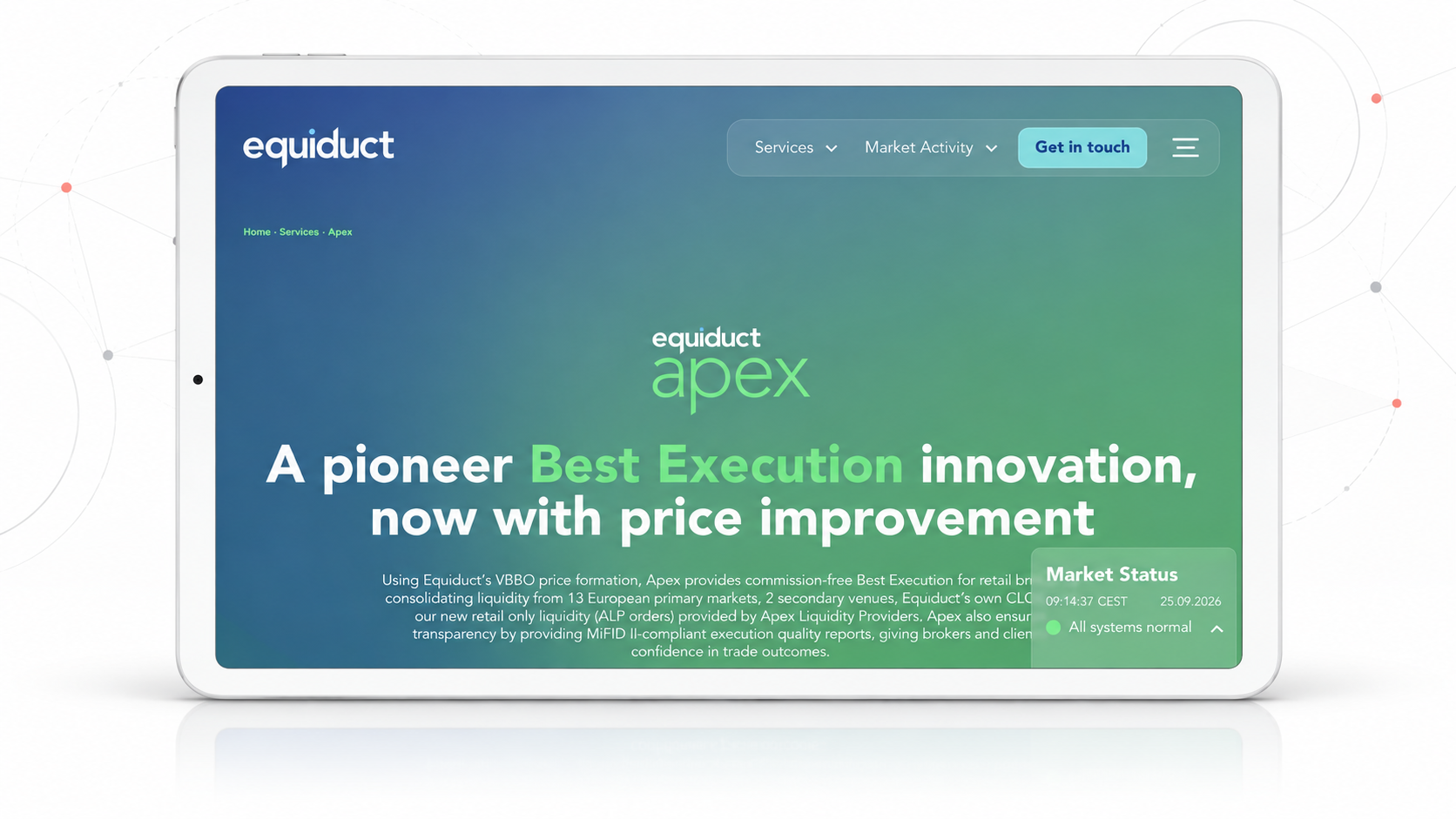
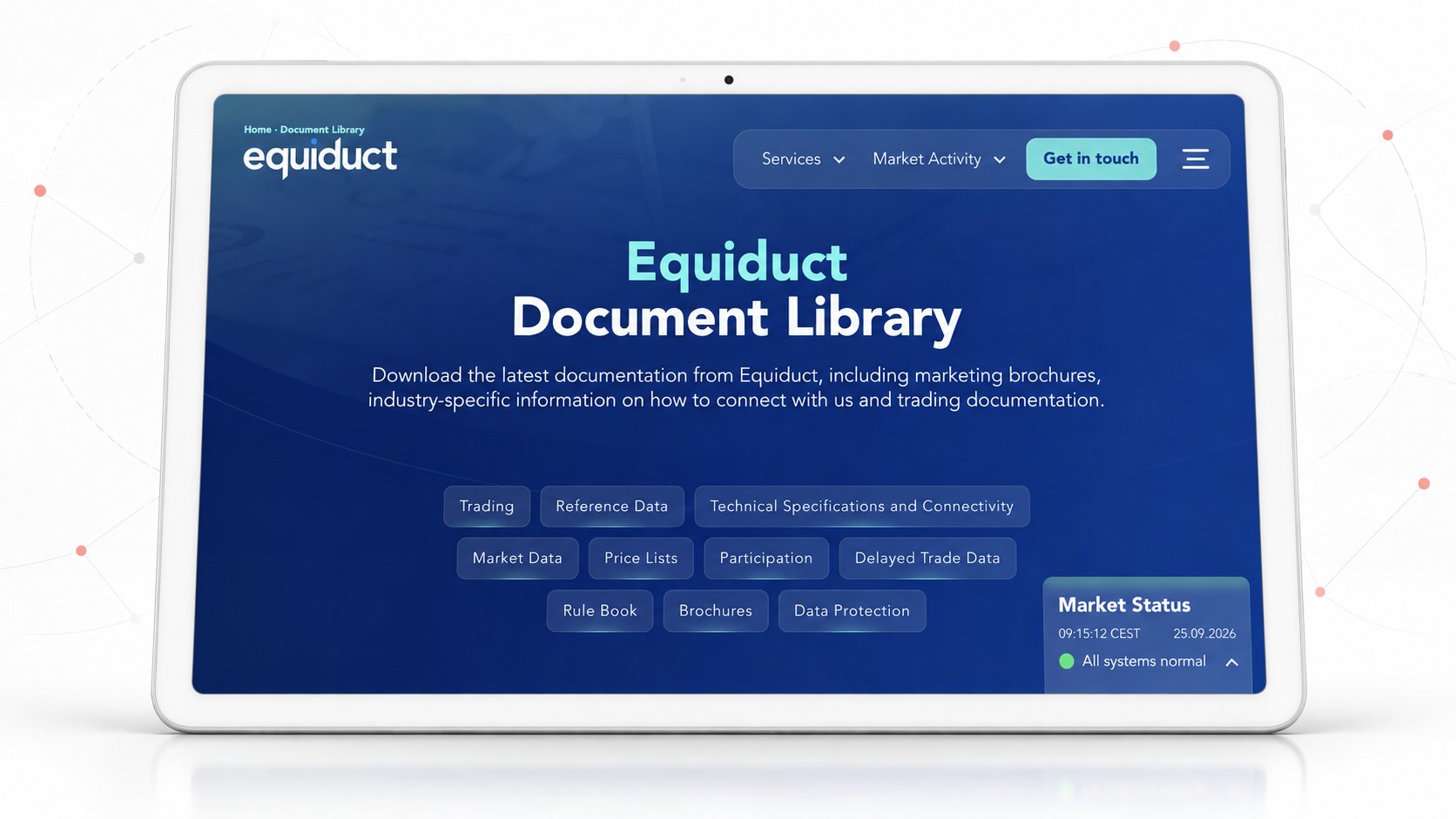
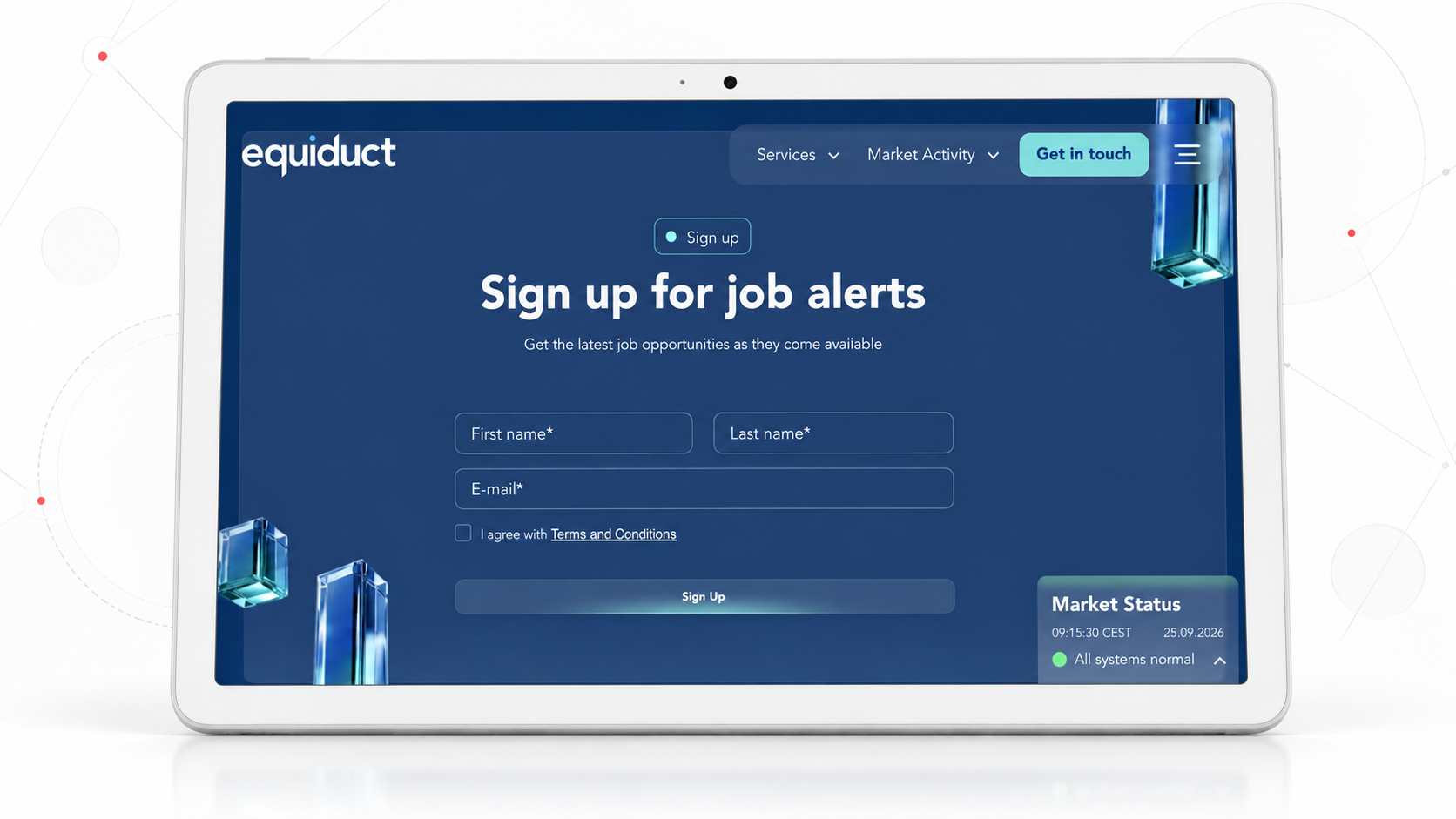
Equiduct is a pan-European electronic trading platform that helps retail brokers access commission-free best execution, aggregated liquidity, consolidated order books and continuously updated market information across European equity markets.
The platform processes high-volume venue data, calculates executable prices for different order sizes and gives market participants the operational visibility, historical context and resilient connectivity required for regulated trading workflows.
Duration
6 months
Technologies
Here’s the Result
- retail brokers receive continuously updated prices, volumes, trades and market-status information without refreshing the interface.
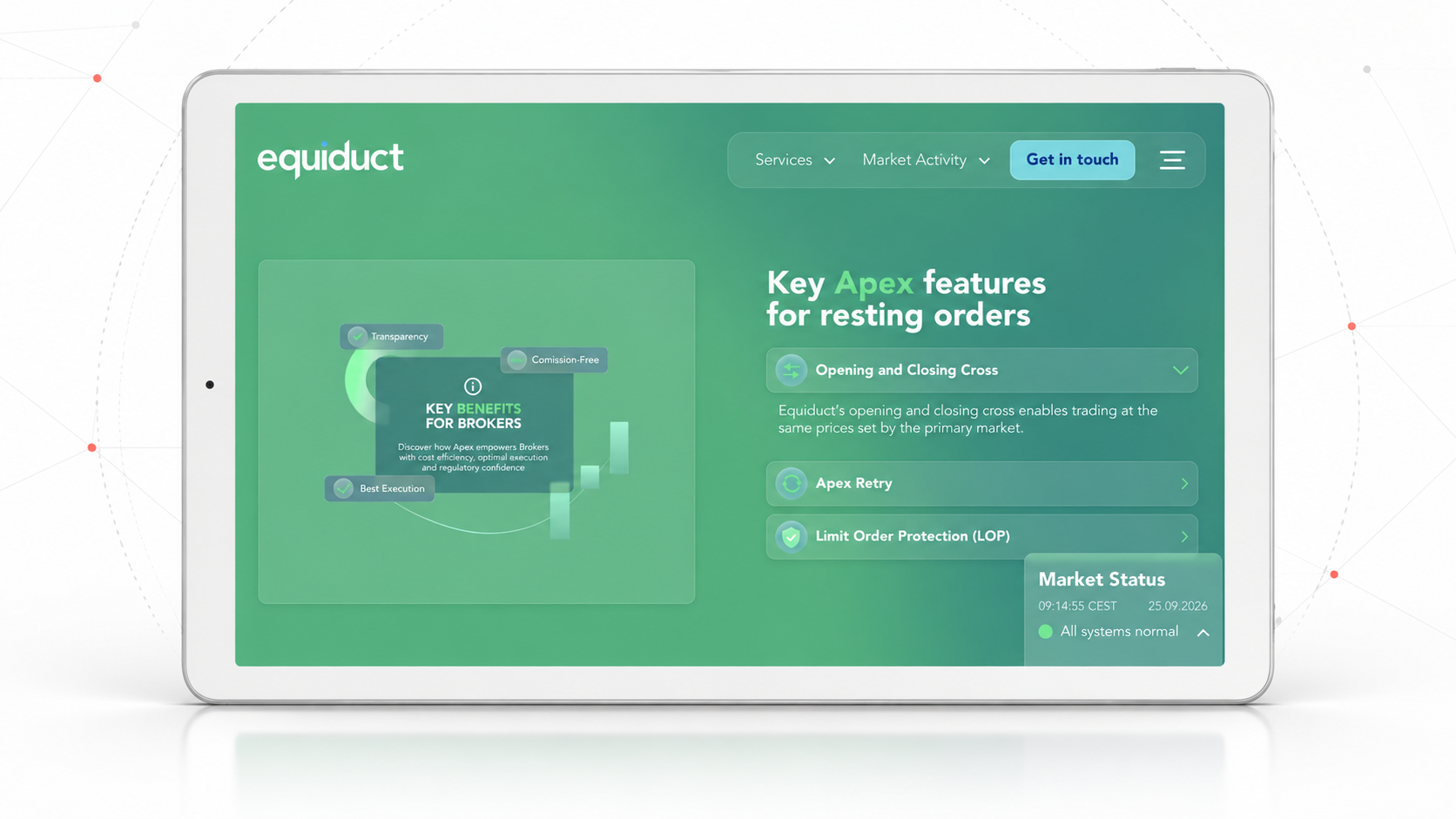
- aggregated liquidity and volume-weighted best bid and offer calculations support commission-free best execution at different order sizes.
- participants can inspect consolidated order books, execution quality and liquidity distribution across European venues.
- historical replay reconstructs the market state at the exact time of a selected trade for investigation and reporting.
- scalable market-data services remain observable and resilient during traffic bursts, feed interruptions and venue recovery events.
Here’s What We Did
- implemented WebSocket and RxJS streams for continuously updating prices, volumes, trades and market-status events;
- created D3.js and Highcharts visualizations for price movements, order-book depth, execution quality, liquidity distribution and historical activity;
- developed Nest.js services for instrument reference data, market sessions, order-book aggregation, trade history, alerts and operational notices;
- integrated FIX Protocol connectivity for broker order flow, execution reports, market-data sessions and participant communication;
- built Apache Kafka pipelines to ingest, normalize, sequence and distribute events from multiple European venues;
- implemented volume-weighted best bid and offer calculations using aggregated liquidity and executable prices at different order sizes;
- used TimescaleDB for high-frequency time-series data and PostgreSQL for instruments, venues, participants, calendars and regulatory records;
- introduced Redis caching and in-memory order-book structures to reduce latency;
- developed historical replay that reconstructs order books and market conditions at the time of a selected trade;
- created near-real-time exchange status monitoring for interruptions, degraded services, session changes and recovery events;
- added role-based access, immutable audit trails, retention controls, request signing, rate limiting and regulatory reporting workflows;
- containerized market-data services with Docker and deployed them through Kubernetes with scaling, health checks and zero-downtime releases;
- implemented load, integration and end-to-end tests for bursts, disconnections, sequence gaps, reconnects and replay accuracy.
Roadmap
Architecture & market-data foundations
Defined instrument and venue models, trading calendars, service boundaries and the real-time event architecture for broker and market-data workflows.
Streaming & execution infrastructure
Built FIX connectivity, Kafka ingestion pipelines, WebSocket and RxJS streams, order-book aggregation, executable-price calculations and low-latency Redis structures.
Analytics, monitoring & replay
Delivered D3.js and Highcharts analytics, historical market replay, exchange-status monitoring, alerts and operational notices backed by TimescaleDB.
Security, scaling & launch
Added access controls, immutable audits, retention and regulatory workflows, then deployed Docker services on Kubernetes and verified burst, disconnect, reconnect and replay scenarios.
Main Functionality
Real-time market data delivery
Best execution & aggregated liquidity
Execution analytics & visualizations
Reference data & regulatory records
Market alerts & operational monitoring
Pan-European venue connectivity
Contact Us