
About project
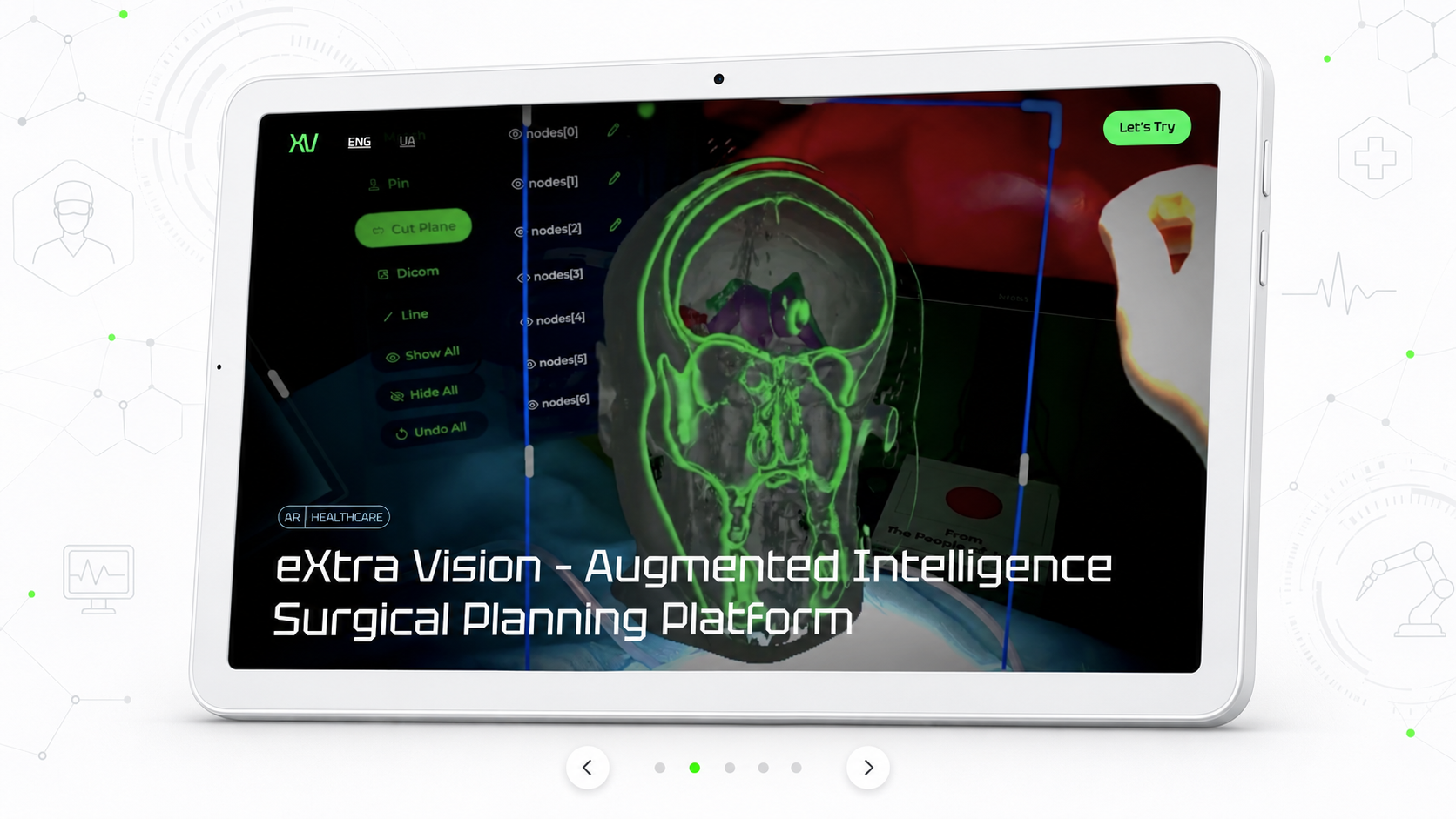
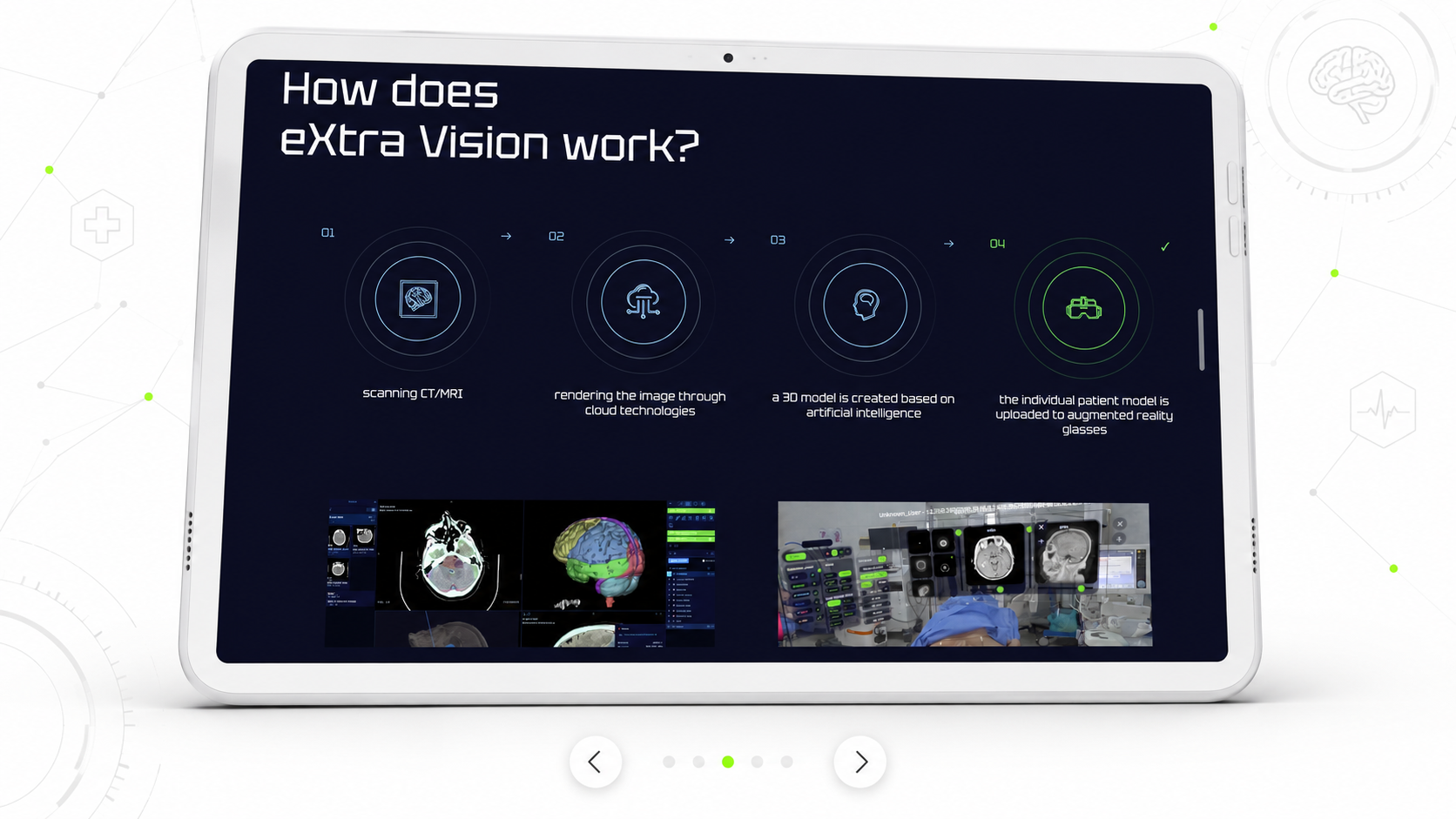
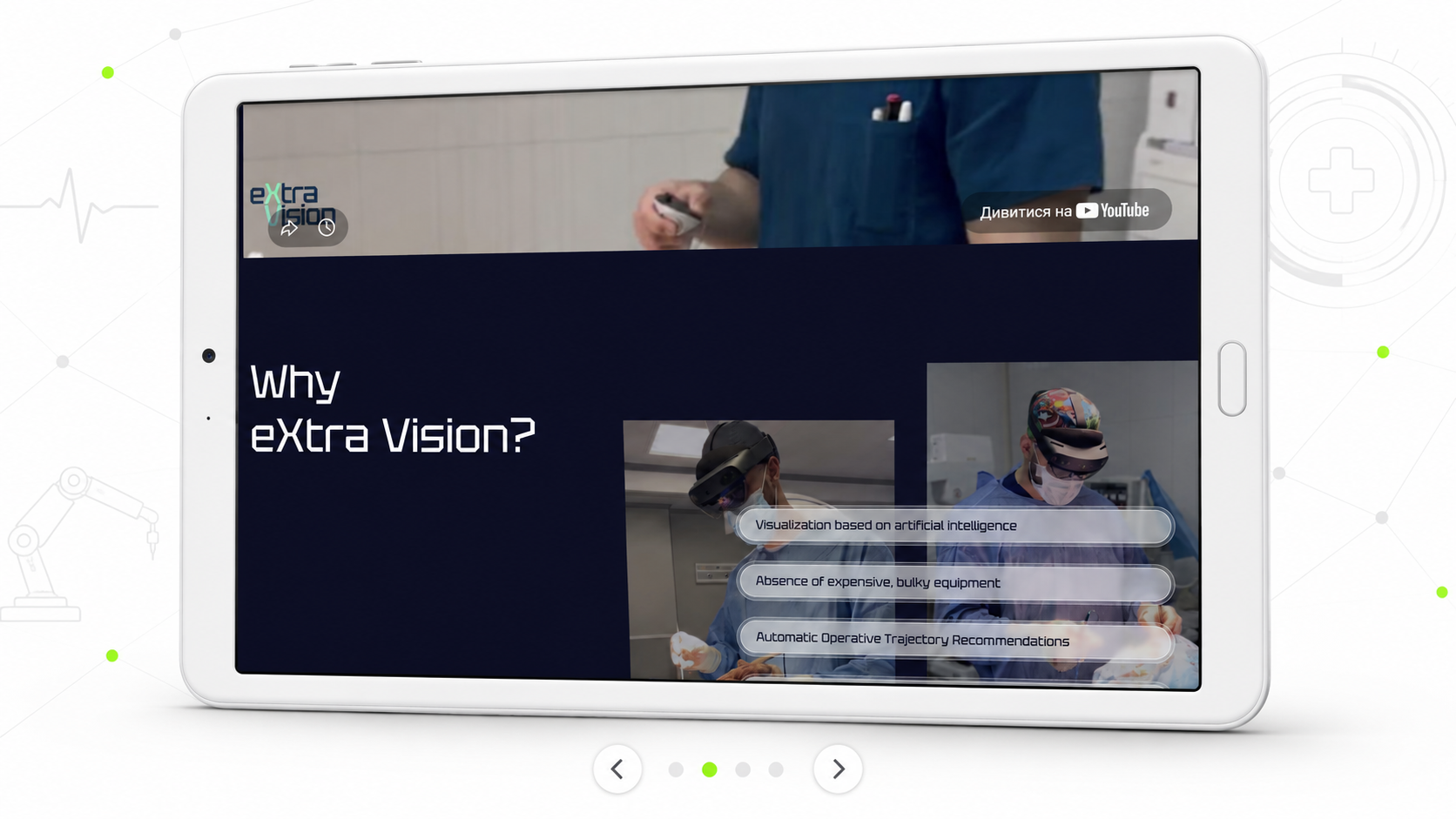
eXtra Vision is an AI- and AR-powered surgical planning and navigation platform that converts CT and MRI scans into patient-specific 3D anatomical models.
Our team developed the medical imaging, AI segmentation, 3D reconstruction, trajectory planning, and WebXR workflows that help surgeons inspect complex anatomy, plan safer operative approaches, and visualize critical structures before and during surgery.
Duration
6 months
Technologies
Business Challenge
Surgeons needed a reliable way to transform complex CT and MRI datasets into clear patient-specific spatial guidance. The challenge was to combine medical image handling, AI segmentation, interactive 3D reconstruction, operative trajectory planning, and augmented-reality visualization while preserving clinical accuracy, responsiveness, and strict protection of sensitive imaging data.
Implemented solutions
We developed a DICOM-based medical imaging workspace, ONNX Runtime inference pipelines for AI-assisted segmentation, and patient-specific 3D reconstruction with vtk.js, Three.js, and WebGL. Surgeons can isolate, clip, measure, and adjust transparency of anatomical structures, compare case versions, and plan operative entry points, targets, angles, and depth.
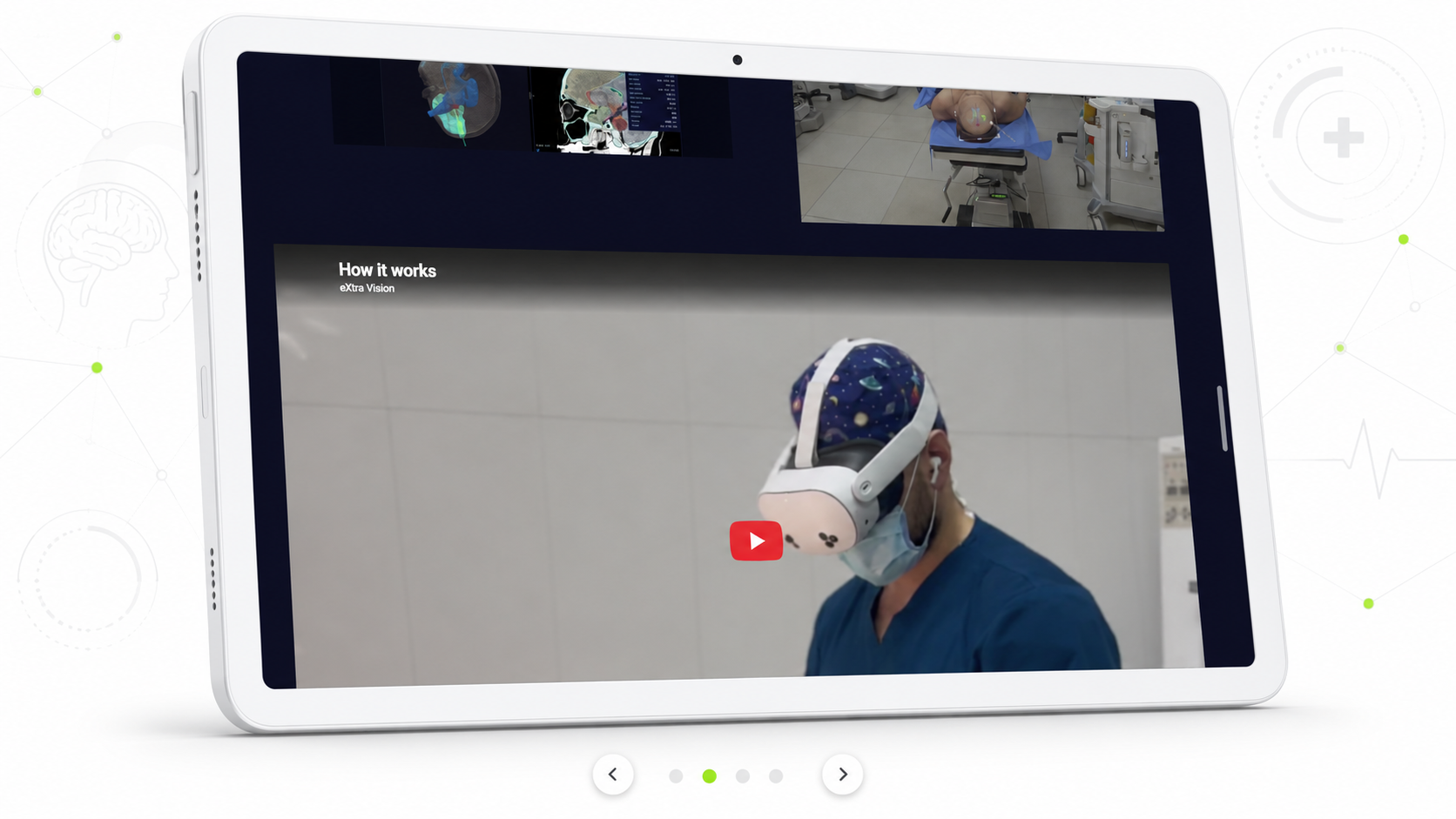
We also implemented WebXR visualization, patient-to-model calibration, Socket.IO synchronization between planning and AR interfaces, PACS retrieval workflows, AWS S3 asset storage, de-identification, role-based access, encryption, and audit-ready clinical records.
Roadmap
Clinical discovery & architecture
Mapped surgical planning workflows, imaging standards, case lifecycle, data protection, and platform architecture.
DICOM imaging workspace
Developed CT/MRI import, PACS retrieval, study organization, de-identification, annotations, and medical image review.
AI segmentation pipeline
Implemented ONNX inference, anatomical segmentation, prediction masks, structured regions, and clinician review workflows.
3D reconstruction & planning
Built patient-specific meshes, volumetric rendering, clipping, measurements, transparency controls, and operative trajectory planning.
WebXR navigation & synchronization
Implemented AR visualization, patient-model calibration, coordinate registration, and real-time Socket.IO synchronization.
Security, optimization & launch
Completed access controls, encryption, audit trails, GPU and mesh optimization, progressive loading, testing, and deployment.
Main Functionality
DICOM Medical Imaging & Case Management
AI-Assisted Anatomical Segmentation
Patient-Specific 3D Reconstruction
Operative Trajectory Planning
WebXR Surgical Navigation
Contact Us