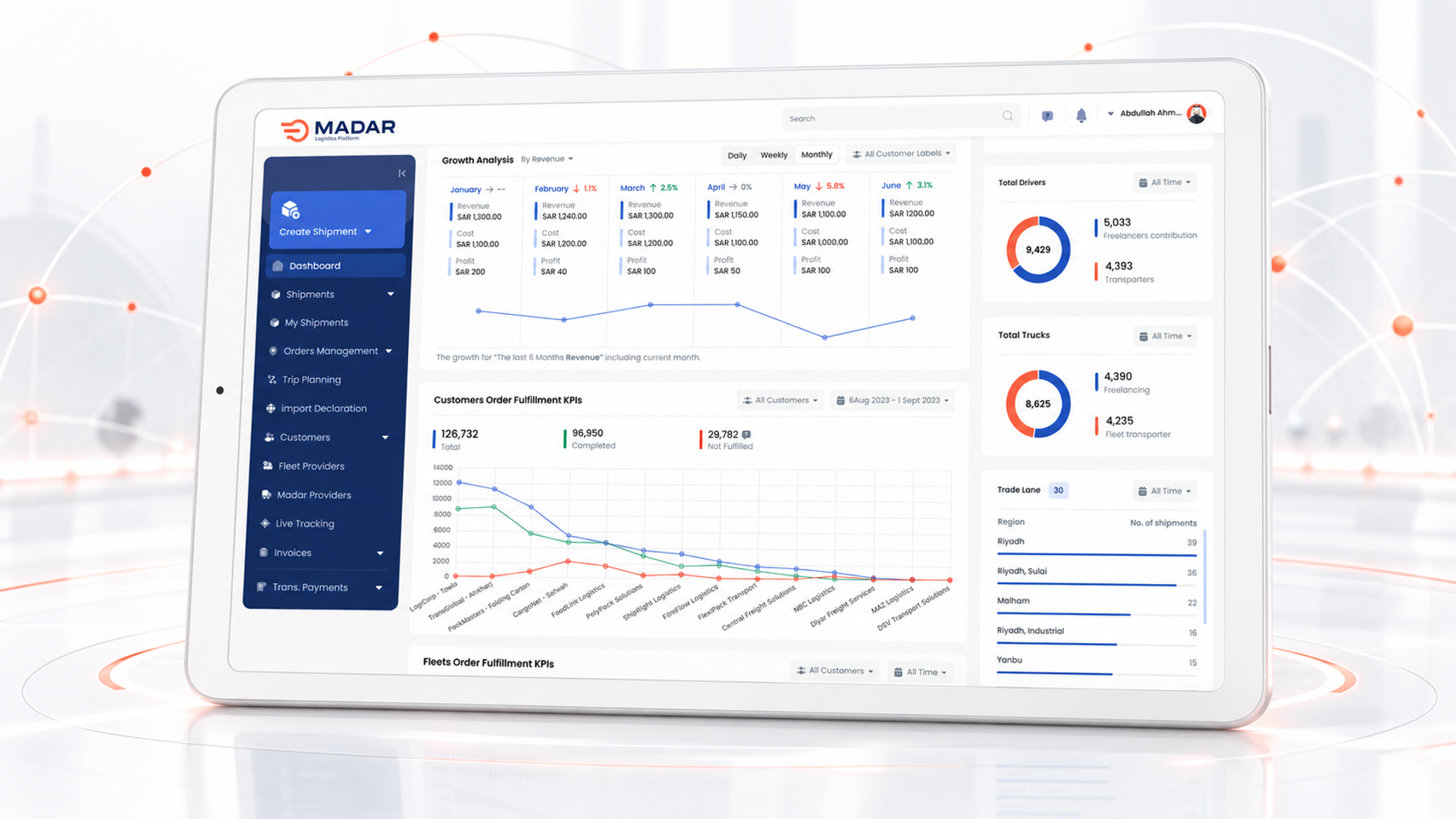

About project
We developed Madar as a scalable, event-driven logistics ecosystem that replaces fragmented transport processes with one operational platform. The solution coordinates shipments, fleets, drivers, IoT telemetry, compliance documents, financial workflows, and high-volume analytics while integrating with the client’s existing ERP, TMS, payment, mapping, AVL, and sensor infrastructure.
Nest.js microservices, Apache Kafka, MQTT, WebSockets, PostgreSQL, TimescaleDB, Redis, Databricks, and AWS provide the performance, reliability, and scalability required for real-time logistics operations.
Duration
8 months
Technologies
Business solutions
The client needed to replace fragmented logistics processes with a scalable real-time platform capable of coordinating shipments, fleets, drivers, IoT telemetry, transport documentation, financial workflows, and high-volume operational data. The solution also had to support multiple organizations, regulatory integrations, secure data exchange, and mobile driver operations without disrupting existing enterprise infrastructure.
Implemented solutions
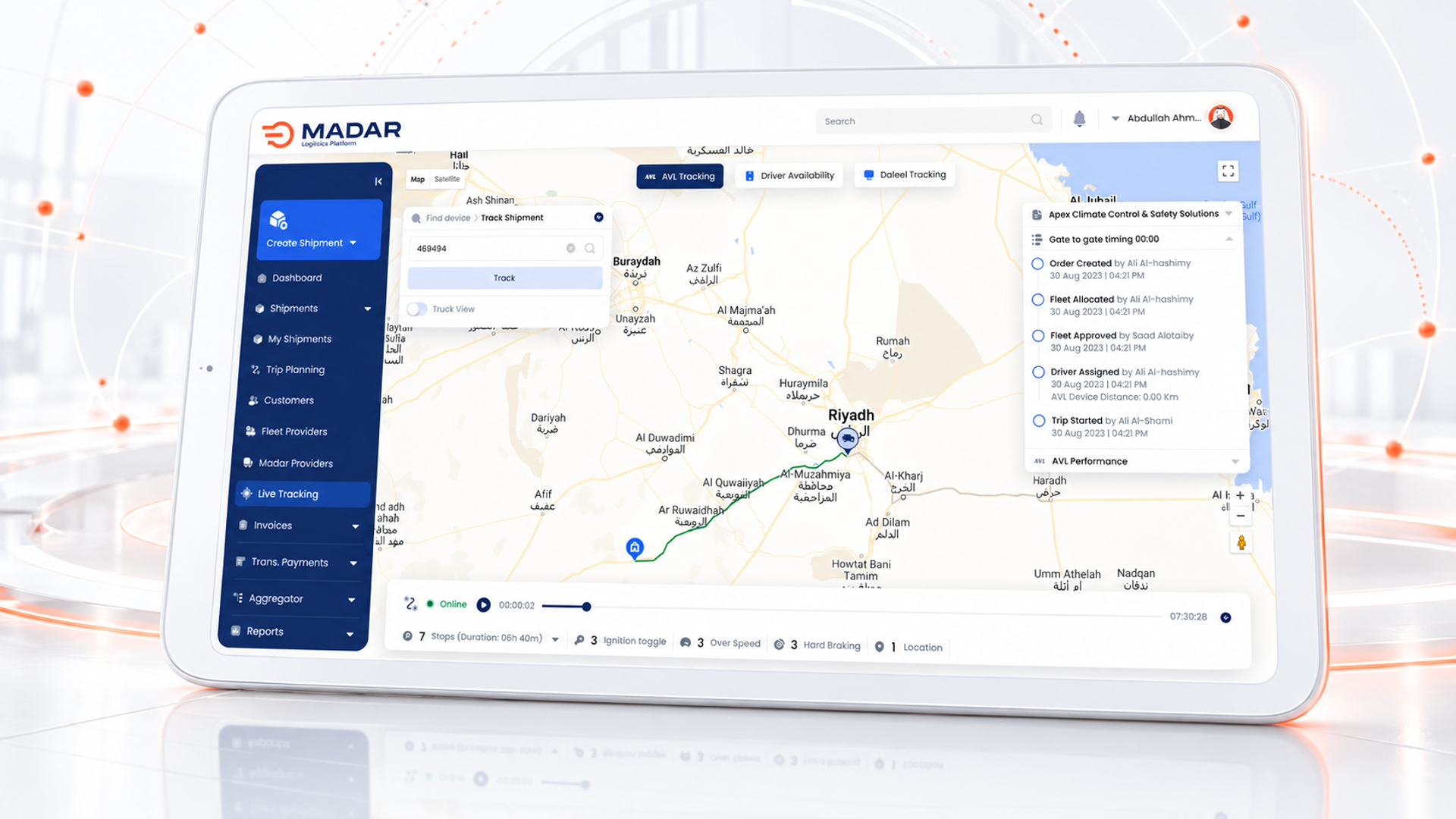
- Real-time truck tracking with geofencing, dynamic ETAs, route history, deviation alerts, stops, and idle-time monitoring.
- MQTT and WebSocket telemetry for GPS, speed, temperature, humidity, weight, and freight-condition measurements.
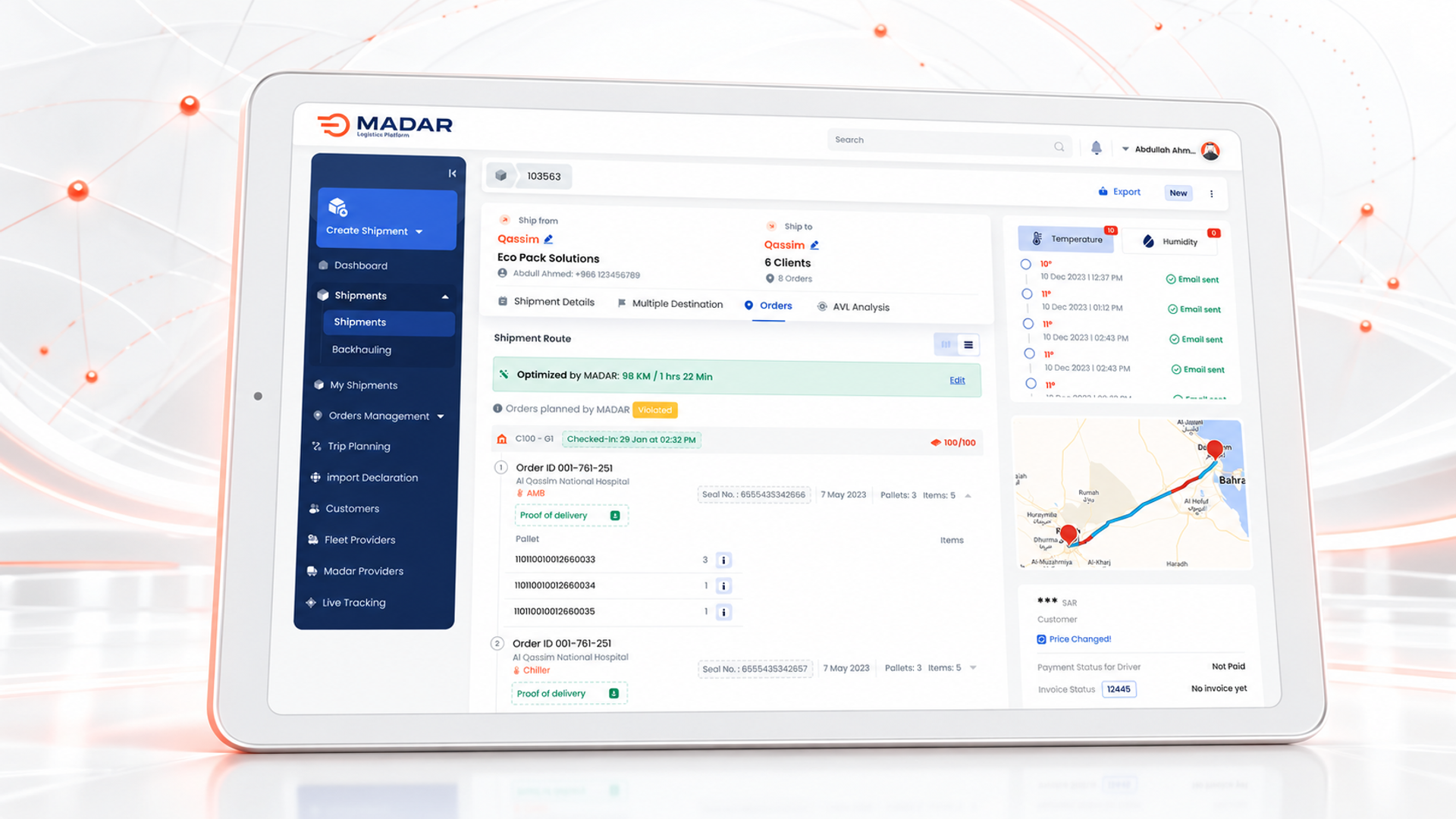
- Automated shipment planning, smart assignment, route optimization, multi-order scheduling, and backhaul matching.
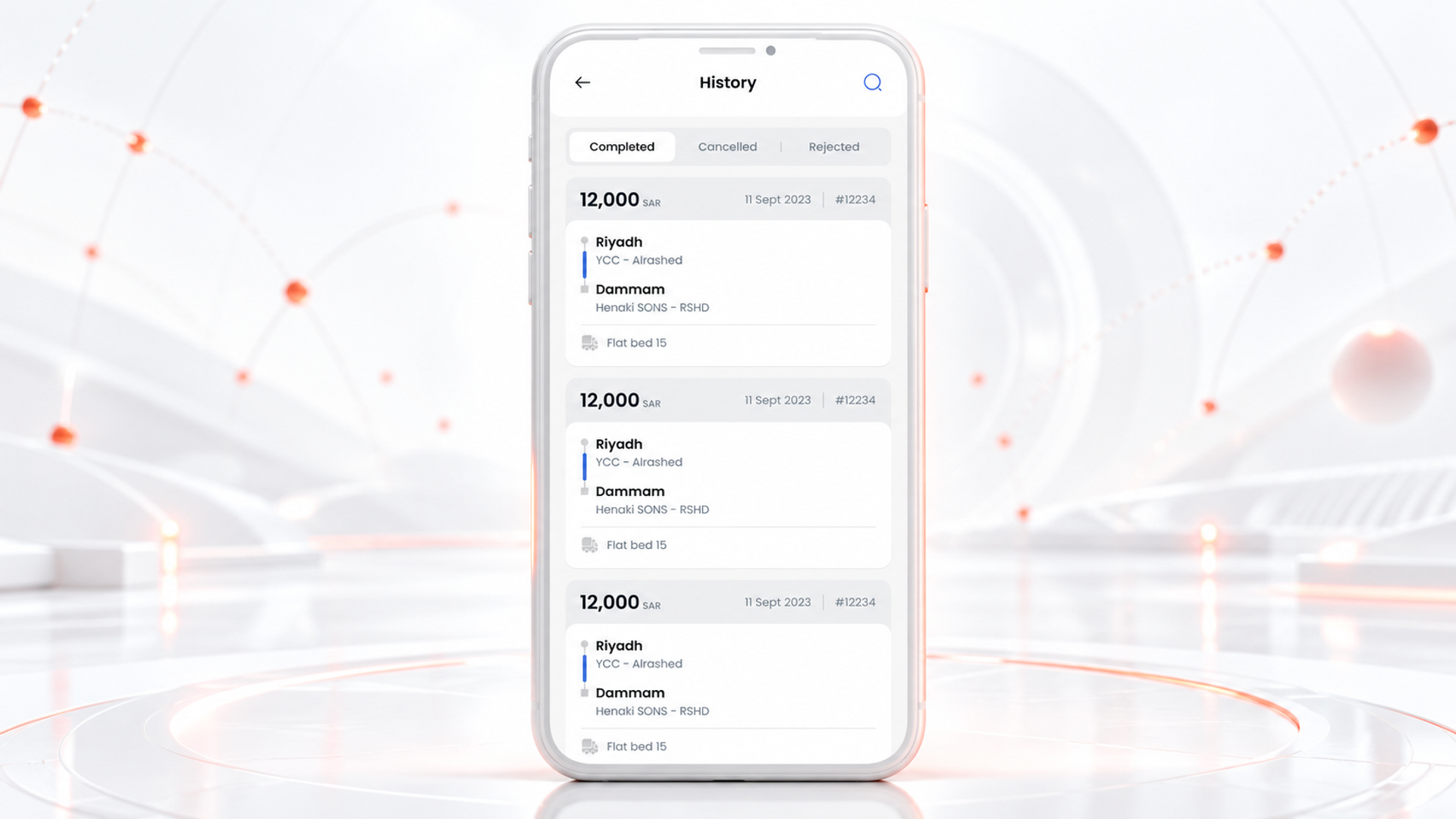
- React Native driver workflows with assignments, route instructions, delivery confirmations, and OTP signatures.
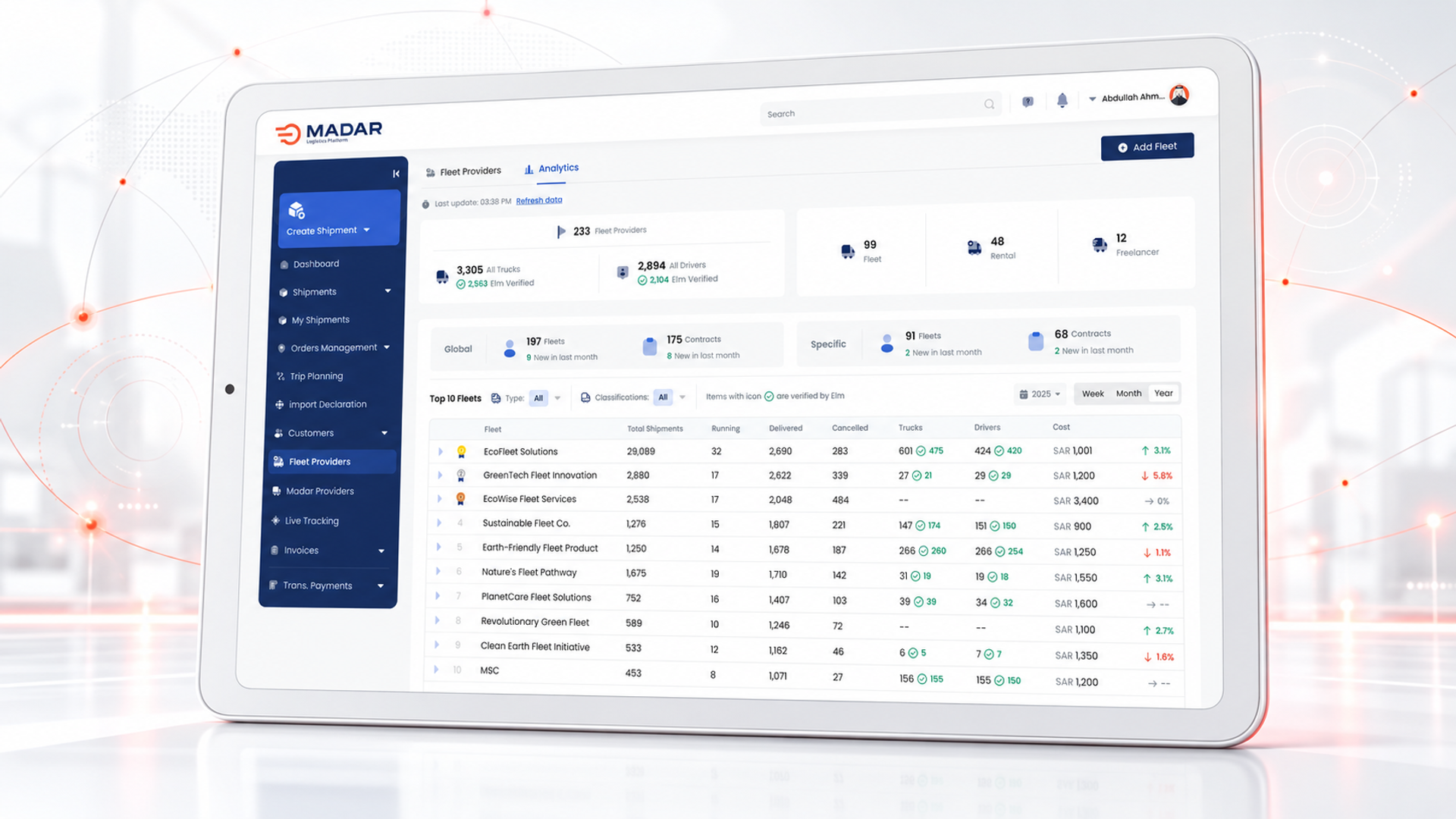
- B2B transport marketplace, carrier offers, shipment auctions, dynamic pricing, and fleet-management tools.
- Digital waybills, proof of delivery, invoicing, payment release, and eGovernment verification.
- Kafka, TimescaleDB, Databricks, and Apache ECharts analytics for operational and management KPIs.
- Secure multi-tenant AWS deployment with automated testing, monitoring, and CI/CD.
Roadmap
Month 1
Requirements, logistics workflows, integration mapping, multi-tenant architecture, security model, and delivery plan.
Month 2
Design system, responsive web foundation, mobile architecture, core data models, authentication, and tenant permissions.
Months 3–4
Shipment management, smart assignments, route optimization, scheduling, fleet management, and driver workflows.
Month 5
Mapbox tracking, MQTT telemetry, WebSocket updates, ETA and deviation alerts, geofencing, and delivery confirmation.
Month 6
Carrier bidding, dynamic pricing, eGovernment verification, digital documents, invoicing, and payment workflows.
Month 7
Kafka pipelines, TimescaleDB, Databricks processing, KPI datasets, control-tower dashboards, alerts, and exports.
Month 8
Integration and load testing, security validation, performance optimization, monitoring, CI/CD, deployment, and launch.
Launch
Production monitoring, operational handover, performance tuning, and post-launch support.
Main Functionality
Real-Time Freight Tracking and IoT Monitoring
Automated Shipment Planning and Route Execution
Route Optimization and Multi-Order Scheduling
Transport Marketplace and Fleet Operations
Driver Mobile Operations
Logistics Control Tower and Advanced Analytics
Contact Us