

Technical SEO 2026: CubeX’s Guide for IT Ecosystems
Technical SEO in 2026: Performance as the Primary Ranking Signal
Rendering Strategies for Technical SEO in 2026
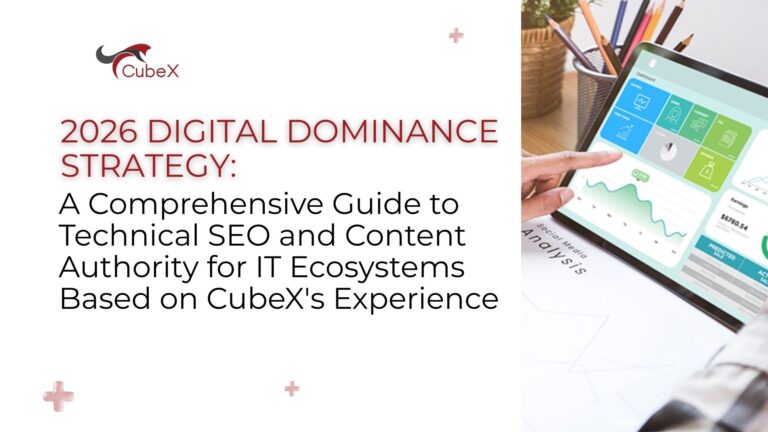
2026 Digital Dominance Strategy: A Comprehensive Guide to Technical SEO and Content Authority for IT Ecosystems Based on CubeX’s Experience
Technical SEO in 2026 has become the foundation of digital dominance for IT ecosystems like CubeX.
In 2026, search engines no longer rank pages by keywords alone. They evaluate real user experience and technical performance.
For a modern IT company like CubeX, which specializes in developing high-load software solutions using JavaScript, Node.js, and React, understanding these changes is critical for ensuring the visibility of client products in the global digital space. Today, success in search results is determined not only by content quality but also by the architectural integrity of web applications, their ability to respond instantly to user requests, and their adherence to strict security standards, especially in niches such as healthcare.
This report offers a comprehensive analysis of SEO optimization rules relevant for 2026, integrated into the context of CubeX’s operations. We examine how technical solutions implemented by the CubeX team—from React rendering optimization to the deployment of cloud DevOps practices—directly impact search authority and business conversion.
Technical Foundation: Performance as the Primary Ranking Signal
In 2026, technical SEO has transformed from a supporting tool into a key differentiator. Google and other search engines utilize updated Core Web Vitals to assess how qualitatively a site interacts with a visitor throughout the entire session. The most significant change was the implementation of Interaction to Next Paint (INP) as the primary interactivity metric, replacing the outdated First Input Delay (FID) .
Optimizing Interaction to Next Paint (INP) in JavaScript Applications
The INP metric measures the delay of all user interactions with the page. For CubeX, which actively uses React.js and TypeScript, this presents the task of minimizing main thread load. Large JavaScript bundles often cause high INP because the browser spends too much time executing scripts, ignoring user clicks or text input .
In the Showcode project—an online platform for developers and tech enthusiasts—CubeX demonstrated mastery in balancing rich functionality with speed. Utilizing Next.js and GraphQL allowed for data structuring so that interactive elements, such as coding challenges and leaderboards, functioned without delays. Detailed information on this case is available in the portfolio: https://cubex-ua.com/our-portfolio/showcode/.
| Metric | Target Value (2026) | Impact on SEO | Optimization Methods |
| Interaction to Next Paint (INP) | ≤ 200 ms | High (Tie-breaker) | Code-splitting, Web Workers, React 18 Concurrent mode |
| Largest Contentful Paint (LCP) | ≤ 2.5 s | Critical (Loading speed) | SSR, ISR, Edge Caching, AVIF formats |
| Cumulative Layout Shift (CLS) | ≤ 0.1 | Critical (Stability) | Defining media dimensions, CSS aspect-ratio |
| Visual Stability Index (VSI) | ≤ 0.05 | New (2026 Update) | Smooth transitions, avoidance of aggressive pop-ups |
Largest Contentful Paint (LCP) and Infrastructure Solutions
LCP remains a critical indicator of the loading speed of the main content. In 2026, the gold standard is a Time to First Byte (TTFB) of less than 200 ms . CubeX achieves such results through the integration of DevOps services, including the use of Docker, Kubernetes (K8s), and Terraform in combination with the Azure system and CI/CD practices.
LCP optimization directly depends on backend efficiency. In the Intelligent Platform case—a sophisticated AI tool for report analysis—CubeX implemented integration with Snowflake for scalable data storage and processing. This allowed the system to quickly generate analytics and render complex graphs without making the user wait, positively affecting the page’s overall ranking.
The New Metric Standard: Visual Stability Index (VSI)
In 2026, Google introduced the Visual Stability Index (VSI) as an extension of the CLS concept. While CLS assesses layout shifts primarily during loading, VSI focuses on interface stability throughout the entire user journey, including scrolling and dynamic content loading in Single Page Applications (SPA) .
For CubeX projects like the gaming SPA platform RBXHype, maintaining high VSI is a priority. Using React Saga for organized side-effect management and Socket.IO for real-time communication allows data updates (e.g., live chats and game results) without unwanted layout jumps, preserving the platform’s SEO authority.
Rendering Strategies for Maximum Indexing
One of the greatest challenges for React applications is ensuring content visibility for search robots. Traditional Client-Side Rendering (CSR) can lead to indexing delays because bots must execute JavaScript to “see” the page.
Choosing Between SSR, SSG, and ISR
CubeX utilizes Next.js to solve indexing issues, offering clients various rendering strategies depending on the content type .
- Server-Side Rendering (SSR): Ideal for dynamic pages, such as personal cabinets in medical systems. The search robot receives fully formed HTML code .
- Static Site Generation (SSG): The best choice for blogs and marketing pages. Content is generated during the project build, ensuring instant loading .
- Incremental Static Regeneration (ISR): Allows for updating static pages in the background after publication. This was successfully applied for the Bonzer agency (bonzer.io), where CubeX helped improve the SEO performance of updated websites.
Analysis of the collaboration with Bonzer confirms that professional technical implementation of frontend and backend is the foundation upon which an entire promotion strategy is built. The client noted that CubeX delivered high-quality work, resulting in increased users and sales.
SEO in Healthcare: Ethics, E-E-A-T, and Security
A primary specialization of CubeX—the digitalization of medical clinics and hospitals—requires a specific approach to SEO. Medical sites are classified as Your Money or Your Life (YMYL), and the highest standards of content quality and technical reliability are applied to them.
Implementing E-E-A-T Principles in 2026
Experience, Expertise, Authoritativeness, and Trustworthiness (E-E-A-T) are the four pillars of medical SEO .
| E-E-A-T Component | Implementation in CubeX Projects |
| Experience | Publication of real cases, such as the digitalization of OneCheck, demonstrating practical industry impact. |
| Expertise | Developing functionality for detailed doctor profiles with their certificates and scientific works . |
| Authoritativeness | Building a link profile through publications in authoritative medical journals and partnerships with European clinics. |
| Trustworthiness | Technical compliance with HIPAA, GDPR, and SOC2, which is an integral part of CubeX infrastructure solutions. |
Technical SEO 2026
Technical Security and HIPAA as a Ranking Factor
For search engines in 2026, patient data security is a critical trust signal. CubeX ensures this through minimal bureaucracy and flexible, result-oriented contracts while adhering to strict coding and DevOps security standards. Projects like Medoh Health (a platform for oncology treatment) or Aura Health (a mental wellness app with 6 million users) require flawless implementation of HTTPS, data encryption, and secure APIs, which CubeX successfully implements as a standard.
The Era of AI Overviews: Generative Engine Optimization (GEO)
The emergence of Google AI Overviews (SGE) and other generative engines has changed the goal of SEO. It is now important not just to be in the top 10, but to become the source that AI cites in its summary above the search results .
Modularity and Content Structuring
To enable AI models to effectively parse and use site content, CubeX recommends implementing the following rules :
- Passage-Level Clarity: Each paragraph or section should have a clear structure and answer a specific question (W-questions).
- Schema Markup: Using JSON-LD for structured data (Article, FAQ, MedicalEntity) is mandatory for algorithms to understand entities .
- Data-Driven Insights: AI prefers content based on unique data and research. The Intelligent Platform case, which uses ChatGPT and LlamaAI for report analysis, demonstrates how CubeX works with large arrays of unstructured data, turning them into a valuable resource.
Impact of AI Overviews on CTR and Strategy
Technical SEO 2026
According to 2026 research, organic CTR for informational queries fell by 61% because users receive answers directly on the search results page . This means that the CubeX brand must focus on gaining citations in these overviews. Native integration of links to cases and client testimonials (such as feedback from Andrei Kamarouski of Pythia or Dale Richards of AppCreative) increases trust from both users and AI algorithms.
Mobile Experience and Cross-platform Optimization
Since the majority of medical search queries and interactions occur on mobile devices, CubeX emphasizes Mobile-First development .
React Native and Native Performance
In the Tradecafe project, CubeX developed a mobile application based on React Native, ensuring a seamless experience on iOS and Android. The implementation of biometric login not only increased security but also improved UX, which is an important signal for modern search engines evaluating interaction convenience.
| Mobile SEO Feature | CubeX Technical Implementation | Business Impact |
| Loading Speed | Use of CDNs and optimized images (AVIF) . | Reduction in mobile bounce rates. |
| Touch Accessibility | Design of buttons and navigation considering ergonomics (min 48x48px) . | Increased conversion in appointment bookings. |
| Biometric Security | Integration of FaceID/TouchID in React Native apps. | Growth in brand trust and retention rate. |
Modern Link Building and Brand Authority
In 2026, the quantity of links has yielded to their quality and relevance. Search engines assess “Brand Mentions” and “Digital PR” as stronger signals than traditional purchased links .
Link Authority Strategy from CubeX
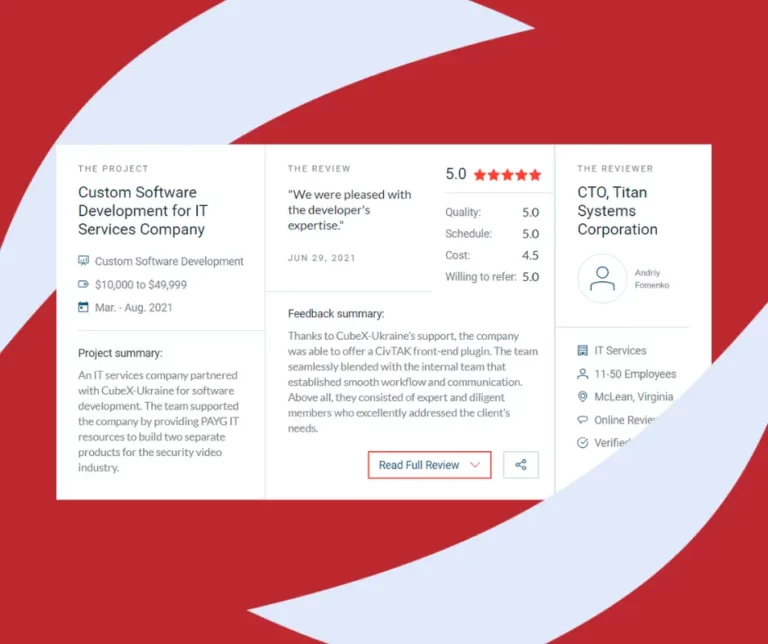
- Partnership with Authorities: CubeX actively works with market leaders, confirmed by reviews on Clutch and DOU. A high rating (5.0 on Clutch) and the status of one of Ukraine’s best B2B firms are powerful signals of authority.
- Creating “Link-worthy” Content: Through its blog, CubeX publishes deep technical analyses (e.g., transforming unstructured medical data using AI) that become objects of citation for other industry resources.
- Digital PR: Publishing successful cases, such as tool development for WelcomeHR or creating gaming mechanics for Novos, attracts attention from media and professional communities.
Conversion and UX: SEO Doesn’t End at the Click
In 2026, the line between SEO and Conversion Rate Optimization (CRO) has definitively blurred. Google considers behavioral factors (dwell time, bounce rate) as indirect signals of page quality .
User Psychology and Interface Solutions
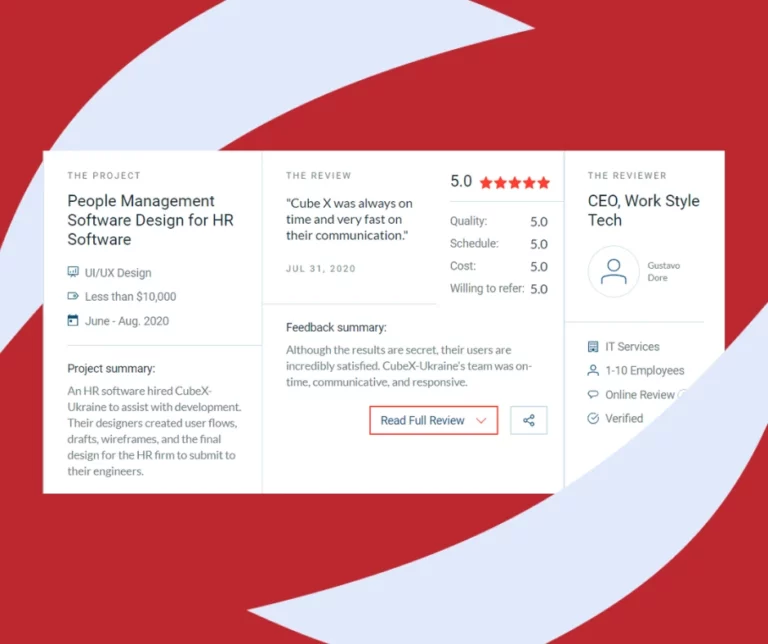
For medical clients, CubeX develops interfaces that minimize patient stress. In the WelcomeHR project, the “Part-time Resume” tool was implemented to help businesses manage personnel effectively. Simple navigation and clear calls-to-action (CTA) ensure a high level of user satisfaction, as confirmed by the CEO of Work Style Tech.
Optimizing the Patient Journey
The development process at CubeX includes a Discovery Stage, where business needs and target audience behavior are analyzed. This allows for the creation of sites where the path from a search query to an appointment booking is as short as possible. For example, integrating calendars and online consultation systems directly into a clinic’s interface reduces costs and increases visitor numbers.
Comprehensive SEO Rules for 2026
Summarizing the research, we have formed a comprehensive set of rules that the CubeX team follows when creating and promoting digital products.
Rule 1: Technical Flawlessness
- TTFB < 200ms: Use Edge Computing and optimized database queries (as in the Snowflake case ).
- INP < 200ms: Minimize JavaScript on the client; use progressive hydration .
- Mobile-First: The site must be perfect on mobile devices, including touch-target and contrast .
Rule 2: Authority and Expertise (E-E-A-T)
- Medical Accuracy: For YMYL content, involve specialized experts and list their credentials .
- Brand Signals: Maintain activity on external platforms (Clutch, LinkedIn, DOU) to build a reputational background.
Rule 3: AI Optimization (GEO)
- Structured Answers: Use lists, tables, and clear headings to facilitate AI model operations .
- Entity Linking: Connect your brand with known entities through Schema Markup and external mentions .
Rule 4: Content and UX
- Topical Authority: Create content clusters around main themes instead of isolated articles .
- Accessibility (WCAG): Website accessibility for people with disabilities is not only an ethical norm but a ranking factor in 2026 .
Conclusion
CubeX’s activities in 2026 exemplify how a modern IT company can harmoniously combine high development technologies with search engine requirements. From creating complex medical ERP systems to developing AI tools for analysis—every CubeX project is built on the principles of speed, security, and user value. Technical SEO in 2026 is no longer optional for IT ecosystems — it is infrastructure.
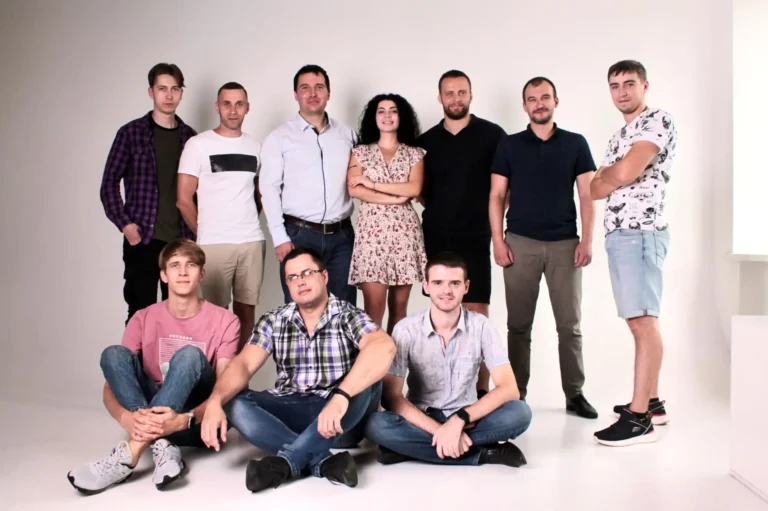
Success in modern SEO is not about manipulating algorithms but about creating a product that deserves user trust and machine intelligence recognition. The CubeX team, with 30+ seasoned experts and over 6 years of experience in bringing revolutionary projects to life, continues to set quality standards in the IT industry. For more information or to request a consultation, visit the official website: https://cubex-ua.com/.
























































Contact Us
Please contact us for any further information
